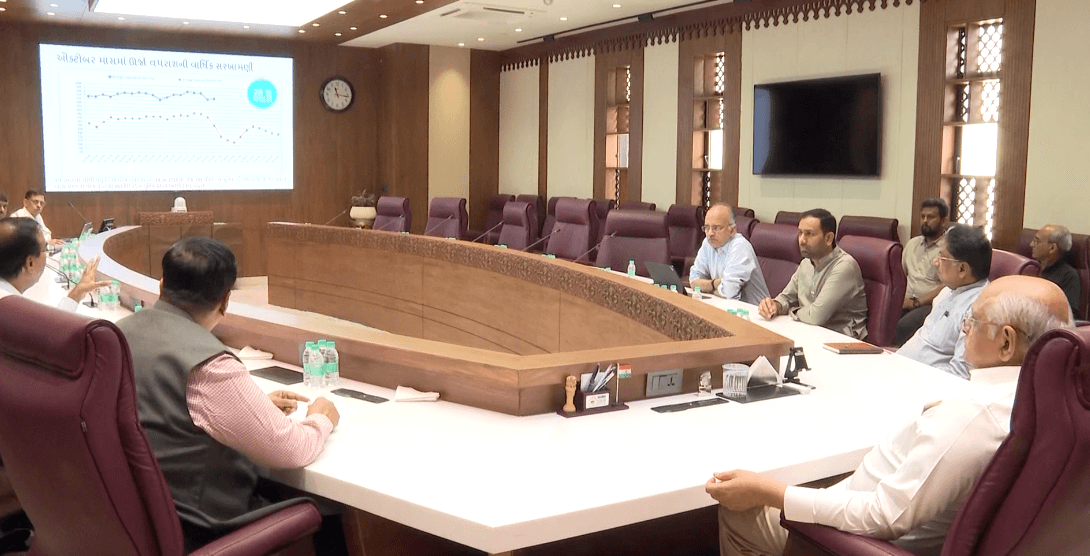
Is there a threat to power supply in Gujarat? With the record-breaking electricity consumption in the state, it has become necessary to plan ahead. The Chief Minister has held an important meeting with Energy Minister Hrishikesh Patel and top secretaries to ensure that there is no power cut or power crisis in the state amid the increasing power demand.
It is important to note that due to weak monsoon, continuously rising heat and bustling industries ahead of festivals, the demand for electricity in Gujarat has reached an all-time high. The state recorded the highest ever electricity demand of 29,822 MW on 16.10.2026, which is 36.6% more than the same month of October last year. Along with this, daily electricity consumption has also increased by 27% to 574 million units.
Gujarat generates about 12,000 MW of solar energy per day, but between 5 pm and 11 pm, solar production drops to zero due to sunset. Also, wind energy production has also decreased due to low wind speed. With the simultaneous increase in cooling load and agricultural load in the evening, maintaining uninterrupted power supply has become a big challenge for the government.
This year, due to the El Nino effect and poor monsoon, there has been a huge surge in the demand for electricity for irrigation to protect the standing crops of farmers. The electricity load of the agricultural sector has increased to 12,000 MW per day. On the other hand, the lack of rainfall in Gujarat and neighboring states has also disrupted hydropower such as hydroelectricity generation.
Earlier, high-level meetings were held in Delhi to increase coal supply to keep the state's thermal power stations running. The Union Coal Ministry has even assured to provide 13 to 14 railway rakes of coal daily from November. In addition, the central government has allocated a total of more than 880 MW of additional electricity to Gujarat from NTPC and Assam Power Generation.
It is important to note that the state government has claimed that work is underway on a battery energy storage system (BESS) to meet the evening demand. A capacity of 500 MW/1,000 MW-hour will be operational by March 2027. In addition, work is underway on a 4,200 MW nuclear power project with NPCIL and a new 800 MW thermal plant at Ukai.
Currently, in the Chief Minister's review meeting, short-term measures and long-term planning are being made to ensure that farmers, industries and common citizens get sufficient uninterrupted power supply. In this review meeting, it has also been planned to shift the agricultural load to the hours of daylight and make maximum use of solar energy.
The State Load Dispatch Center and power distribution companies are continuously working to maintain grid balance. Chief Minister Bhupendra Patel has reviewed the power demand and supply situation and directed the Power Department to expedite the work of future planning and increasing power generation.